Chapter 4 · concept 6 of 6 · show all
2Tokens, cost and your first RAG
4Chunking
- 4.1Why we chunk, and the main chunking strategies
- 4.2Structure aware chunking and tables
- 4.3Chunk size, overlap and token based sizing
- 4.4Contextual chunking and late chunking
- 4.5Parent child and multi representation indexing
- 4.6Chunk metadata, provenance and the chunking debugging playbook
- Chapter overview
7Finding the right chunks
8When retrieval fails
Chunk metadata, provenance and the chunking debugging playbook
What to store with every chunk so you can cite, filter and update it, and a step by step way to find out why a question was missed.
A real question
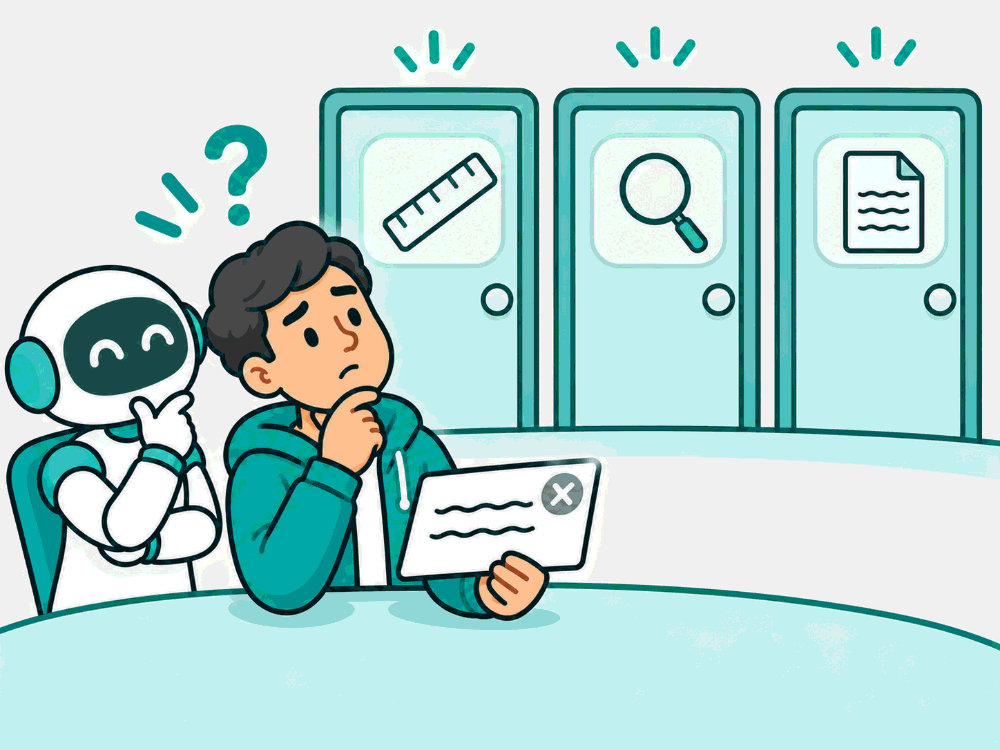
A test question failed. Was it the chunk size, the search, or the document?
Check four things in order: is the answer in the corpus, is it whole in one chunk, was that chunk found, and was it ranked high enough. Metadata on every chunk makes each check quick.
The problem
Why this matters
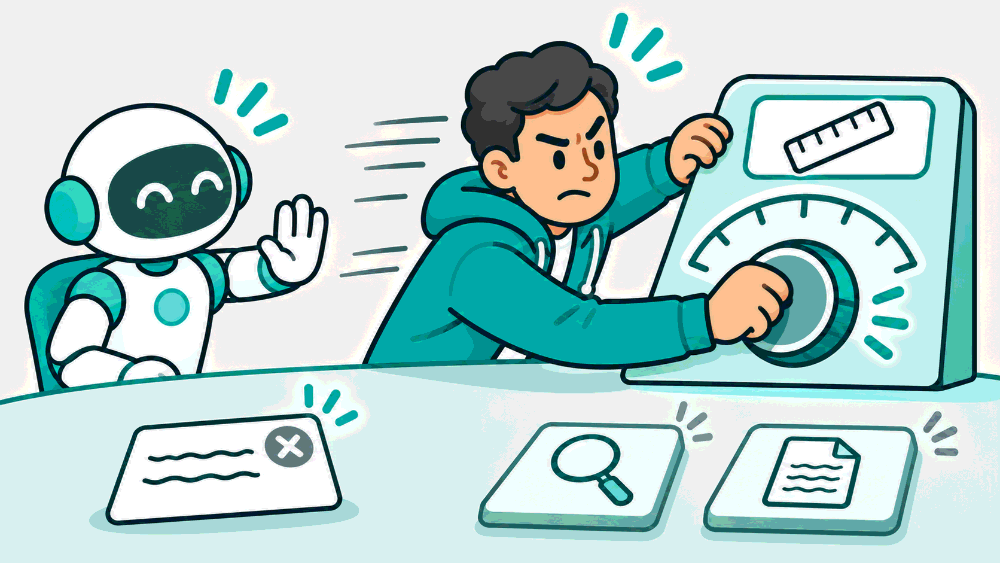
An answer was missed, so change the chunk size.
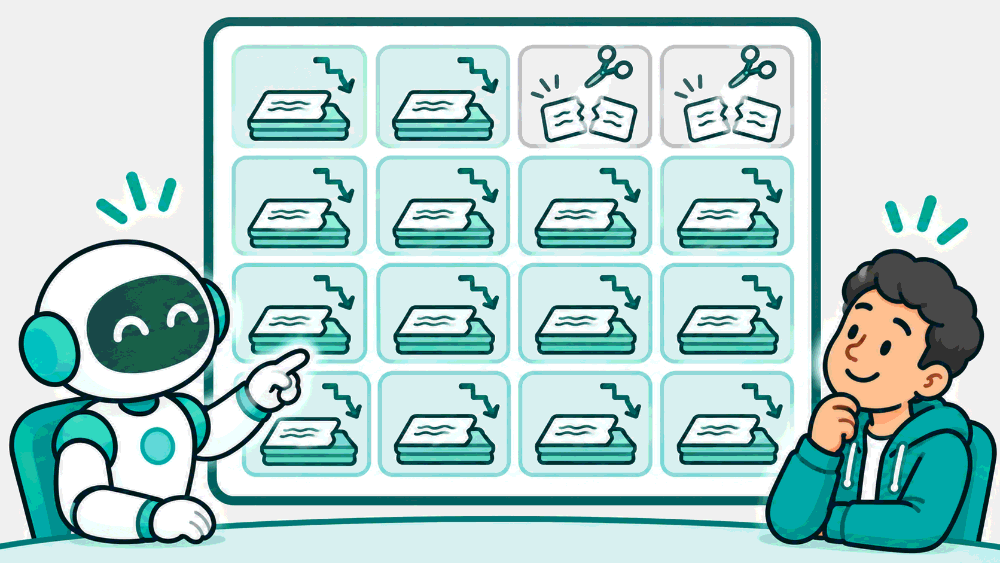
Across all 16 settings, cut answers only happened with small fixed chunks. Every other miss was the right chunk ranked too low, which a new size will not fix.
Why not the simpler way
The simple chunk is a string and a vector. It searches fine, but when something goes wrong you cannot answer basic questions: which document and version did this come from, which section, is it still valid, may this user see it? And when a golden question fails, you cannot tell whether the cut, the ranking or the document was to blame.
The idea
The idea in plain words
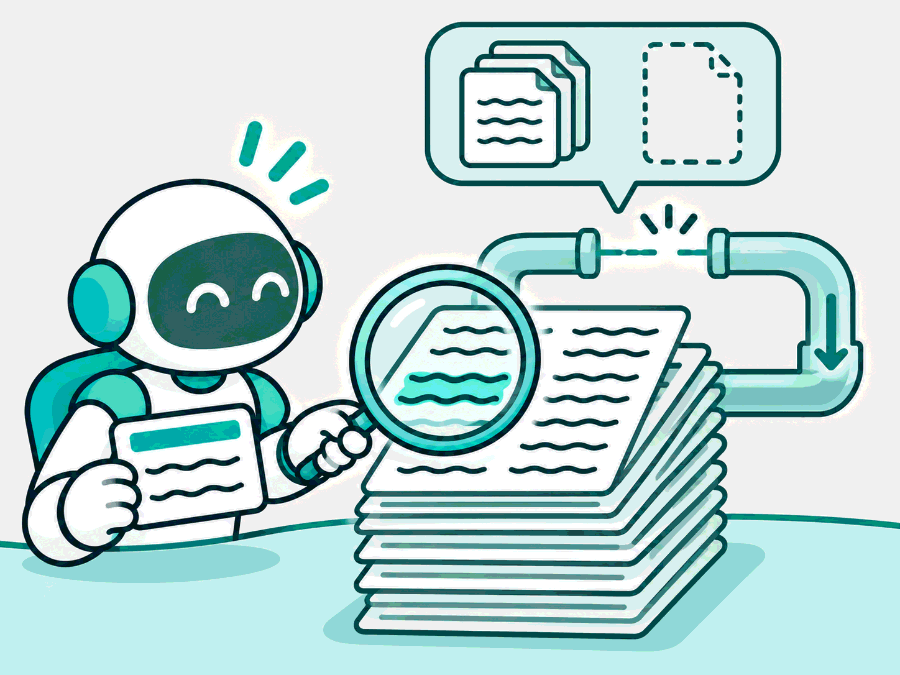
Every chunk should carry its provenance: where it came from and in which state. With that, you can cite, filter, update and debug. Debugging then becomes a checklist instead of a guess: is the answer in the corpus, was it kept whole by the chunker, was it retrieved, and was it ranked high enough?
A museum label tells you the artist, the year, the room and the loan status. Without it, a painting is just a picture.
How it works
Step by step
 1
Is the answer in the corpus?
Search the raw documents for the answer text. If it is missing, the problem is ingestion.
 2
Is it whole in one chunk?
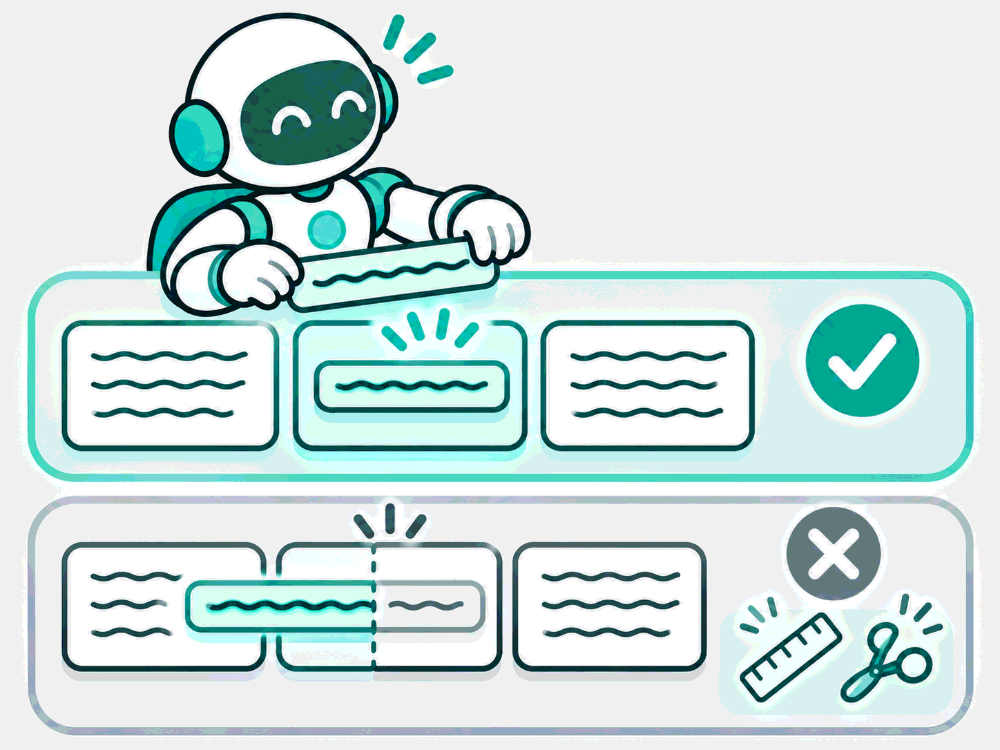
If no chunk holds the whole answer, the cut split it: fix size, overlap or strategy.
 3
What rank did it get?
Just below the top 3: try hybrid search or reranking. Far down: look at the wording of question and chunk.
In detail
Store with every chunk: document id, version, file or URL, section path, character or page span, chunk index, content hash, effective dates, access labels, language and the chunker settings that made it.
The playbook for a missed question:
- In the corpus? Search the raw documents for the evidence text. If it is missing, it is an ingestion problem.
- Whole in one chunk? If no chunk contains the evidence, the cut split it. Fix the chunker, size or overlap.
- Retrieved at all? Find the chunk's rank. If it is far down, look at the question and chunk wording, then try hybrid search or a contextual header.
- Ranked below k? If it is just below the cut-off, try reranking or a slightly larger k, and measure the cost.
The code
Try it in Python
def diagnose(q, corpus_text, chunks, ranked_ids, k=3):
    """Classify why a golden question missed, in playbook order."""
    if q["evidence"] not in corpus_text:
        return "not in corpus: ingestion problem"
    holders = [c["id"] for c in chunks if q["evidence"] in c["text"]]
    if not holders:
        return "split: no chunk holds the whole answer"
    rank = min(ranked_ids.index(h) for h in holders)
    return "hit" if rank < k else f"ranked low: best holder at rank {rank + 1}"
See it
What we measured
Measured · misses by cause, 47 golden questions
All 16 precomputed settings, vector search with bge-small-en-v1.5, top 3. Split: no chunk holds the whole evidence. Ranked low: a chunk holds it but ranks below 3.
Measured 2026-11-03 with the Chunk Lab logic. Splits happened only in fixed windows of 128 and 256 tokens without overlap. Every other miss was a ranking problem, so after a sensible chunk size the next gains come from retrieval, not from cutting.
Try it on a real example
Diagnose a real miss: “How much notice is given for a price change during a fixed term?” (recursive 512, vector search)
Tariff sheet 2026.1
Yes. Ingestion is fine.
Choosing
Use it when, avoid it when
- Provenance on every chunk: id, version, span, hash, dates, access
- The four-step playbook on every failed golden question
- Chunks stored as bare text and vectors
- Changing chunk size to fix what is really a ranking miss
What it costs · A few hundred bytes of metadata per chunk, and logging per evaluation run. Small next to the time it saves on the first incident.
In production
Log the chunk ids and ranks for every golden question in every evaluation run, and keep them next to the score. When a number drops after a change, you can diff which questions moved and why. Use the content hash to detect which chunks really changed on a re-index, and the effective dates and access labels as filters at query time.
Watch out
Common mistakes
- Misses mean the chunk size is wrong. Here, most misses were ranking misses.
- Overlap is a safe default. It fixed splits and created more ranking misses.
- Metadata is only for filters. It is also how you cite, update and debug.
Check yourself
Remember this
Remember these
- Store provenance on every chunk: document, version, span, hash, dates, access.
- Diagnose misses in order: in corpus, whole, found, ranked high enough.
- Overlap on 128 token chunks turned 6 cut answers into 0, but ranking misses rose from 5 to 9.
- Log chunk ids and ranks per test question, so you can compare runs.
Say it in an interview
- 01Every chunk carries provenance: document, version, span, hash, dates and access labels.
- 02My playbook for a miss: in the corpus, whole in a chunk, retrieved, ranked high enough.
- 03Across 16 settings, splits only happened in small fixed windows; the rest were ranking misses.
- 04Overlap on fixed 128 turned 6 splits into 0 but raised ranking misses from 5 to 9.
- 05I log chunk ids and ranks per golden question so I can diff runs after a change.
Quick quiz